Table of Contents
Introduction : Avengers – Doomsday
Have you ever felt that distinct thrill in a crowded cinema right before a big blockbuster starts? A sense of expectation permeates the room as everyone gets ready for something truly remarkable as the lights go down and the audience goes hushed. Marvel fans may anticipate precisely that emotion with Avengers: Doomsday. This Avengers – Doomsday movie, which is scheduled to open in UK theaters on December 18, 2026, before going global, is expected to be much more than just another installment in the Marvel Cinematic Universe. Rather, it stands for a daring new path that might completely change the franchise’s future.
Earth’s greatest heroes are finally feeling the effects of years of confused timelines, multiversal turmoil, and innumerable other universes. Characters from completely different worlds are brought together under unusual circumstances and confront an unprecedented menace. They are fighting not just a formidable foe but also the demise of life itself. Avengers: Doomsday is looking to be one of Marvel’s most ambitious and high-stakes adventures ever made, with the fate of every reality at stake.
The Path to Destructive Destiny: What Is Doomsday All About?
Avengers: Doomsday revolves around the terrifyingly simple idea of total and irrevocable annihilation. The threat this time is much greater than the annihilation of a single planet, galaxy, or perhaps the entire universe. The scope of the threat is so great that other disasters in the Marvel Cinematic Universe look insignificant. The impending crisis in Doomsday threatens the entire fabric of reality itself, whereas Thanos formerly frightened audiences with his plan to eradicate half of all life.
Every hero is being tested to the utmost as the stakes have changed from cosmic to genuinely multiversal. There is now an unprecedented sense of urgency in the series as entire planets, timelines, and universes are at stake. The heroes must deal with difficult decisions, tremendous odds, and adversaries who have the power to alter reality itself as they face the prospect of their entire existence being eradicated. Preserving all that has ever existed or could ever exist is now the goal of survival, rather than saving billions of lives. Because of this enormous load, Avengers: Doomsday becomes a tale of sacrifice, desperation, and the struggle against ultimate extinction.
Three Worlds, One Final Stand: The Multiversal Collision
Imagine three enormous sheets of glass speeding toward one other. When they eventually encounter, they do not just merge to form a bigger building; instead, they explode into many pieces that spread in all directions and can never be rebuilt. The devastating scenario at the heart of Avengers: Doomsday is aptly shown in that powerful picture. The fundamental foundations of existence are in danger of being destroyed by the impact of entire realities that are headed for collision.
For the first time, heroes from radically disparate cultures, histories, and experiences must stand side by side due to this calamity. Characters that have never met, engaged in combat, or even been aware of one another’s existence must fast come to trust one another. It is unimaginable to face devastation on one’s alone. Old rivalries, personal goals, and ideological disagreements take a backseat to a much greater struggle for survival when barriers between worlds dissolve. The outcome is an unprecedented cross-reality event that brings together an incredible array of storylines and heroes in a way that makes other Marvel crossover spectacles seem insignificant. The goal of this cinematic confluence is to take the franchise into new and daring areas.
Understanding Incursions and Reality Collapses
Examining the idea of “Incursions” is crucial to comprehending the catastrophe taking place in Avengers: Doomsday. Incursions are regarded as one of the most perilous and disastrous phenomena in Marvel mythology. They happen when the boundaries between two different worlds start to erode and disintegrate, leading those realities to inevitably collide. An Incursion puts whole worlds at risk of extinction, in contrast to typical cosmic threats that only affect a single planet or timeline.
The fact that there are no simple answers is what makes an incursion so dangerous. The prospect of saving both gradually fades as the two realities move closer to one another. Often, the only way to keep one universe intact is to completely sacrifice the other. But the outcome is considerably worse if nothing is done: both worlds are destroyed, instantly deleting countless lives, histories, and futures. There is no really moral solution to this brutal dilemma.
An Incursion might be thought of as the greatest cosmic game of chicken. Neither of the two realities can simply slow down or change course as they race toward each other on a collision course. Most heroes have no control over the forces that propel them, so as time runs short, every choice becomes more and more urgent. These universe-ending collisions seem set to become the main fight in Avengers: Doomsday, causing a crisis so massive that even the united power of Marvel’s finest heroes might not be sufficient to stop it.
From The Kang Dynasty to Doomsday: The Behind-the-Scenes Shift
The journey to Avengers: Doomsday has been almost as dramatic as the story it aims to tell. When Marvel Studios first unveiled its plans for the next major Avengers event, the Avengers – Doomsday film carried a very different title: Avengers: The Kang Dynasty. At the time, it was expected to serve as the centerpiece of the Multiverse Saga, with Kang the Conqueror positioned as the franchise’s next great overarching villain.
However, the path forward changed significantly as Marvel Studios reassessed its long-term plans. A combination of real-world developments and evolving creative priorities led the studio to rethink the direction of its multiversal storyline. Rather than continuing with a narrative centered on Kang and his many variants, Marvel chose to reshape the saga around a different threat—one deeply rooted in comic book history and widely regarded as one of the most formidable adversaries the Avengers have ever faced.
This creative shift did far more than simply replace one villain with another. It transformed the tone and focus of the entire storyline. Instead of concentrating primarily on time travel, alternate versions of the same character, and complex temporal conflicts, the narrative now appears to embrace a darker and more personal form of conflict. The stakes remain cosmic in scale, but the danger feels more immediate, psychological, and emotionally charged. Heroes are likely to face not only overwhelming physical challenges but also moral dilemmas, fractured alliances, and difficult sacrifices that test their identities and convictions.
For many fans, this change has injected fresh energy into the Multiverse Saga. By pivoting toward a legendary comic-book threat with a rich history and immense narrative potential, Marvel has opened the door to a story that feels both grand in scope and deeply personal. Rather than derailing the franchise’s future, the decision may have strengthened it, setting the stage for an Avengers – Doomsday film that is more intense, unpredictable, and emotionally impactful than originally envisioned.
The Masterminds Behind the Camera: The Return of the Russos
Experience becomes more than a benefit when a Avengers – Doomsday film project reaches this scope and complexity it becomes essential. Filmmakers must be aware of the creative and practical difficulties involved in presenting a Avengers – Doomsday story that crosses several planets, has a sizable ensemble cast, and weighs years of interrelated Avengers – Doomsday storytelling. This is not the type of production that should be left to rookies. It requires seasoned executives who can offer an engaging and coherent story while managing high expectations.
For this reason, Marvel sought out directors who had a proven track record of managing high-stakes blockbuster narratives. These creators have already steered the franchise through some of its most ambitious and prosperous chapters, striking a huge balance between spectacle, character development, and emotional stakes. Because of their experience with the Marvel universe, they are able to identify areas where the story needs to change while still understanding what consumers find appealing.
Leading Avengers: Doomsday is similar to navigating a massive ship over choppy waters in many respects. Numerous moving pieces are impacted by every choice, including cherished characters, enduring plots, and upcoming movies whose success depends on it. By entrusting the project to seasoned professionals, Marvel is demonstrating its dedication to producing an event worthy of the Avengers moniker—one that can steer the franchise through its most difficult and significant chapter to yet.
Anthony and Joe Russo: The Architects of Marvel’s Greatest Epics
The return of directors Anthony Russo and Joe Russo to the Marvel universe immediately generated excitement across the entertainment world. Their reputation comes from an exceptional ability to manage enormous ensemble casts while keeping the story emotionally engaging and character-focused. Rather than allowing visual effects and large-scale spectacle to overshadow the narrative, they ensure that every major moment serves a meaningful purpose.
Throughout Avengers – Doomsday films such as Captain America: The Winter Soldier, Avengers: Infinity War, and Avengers: Endgame, the Russo brothers demonstrated a unique storytelling style that blends action, emotion, and character development. Their action sequences are never just about spectacle; each confrontation reflects the motivations, fears, and sacrifices of the heroes involved. This ability to combine grand-scale entertainment with genuine emotional depth is one of the key reasons fans are confident that Avengers: Doomsday is in capable hands.
Stephen McFeely and the Foundation of Marvel’s Mythos
A director’s vision can only be as strong as the story guiding it, which is why the return of writer Stephen McFeely has generated so much enthusiasm among Marvel fans. Reuniting with the Russo brothers, McFeely brings years of experience crafting some of the franchise’s most memorable and emotionally resonant stories. His writing is known for balancing massive stakes with deeply personal character moments, ensuring that even the largest battles remain grounded in human emotion.
What makes McFeely’s approach so effective is his understanding that audiences connect with characters first and spectacle second. Visual effects can create breathtaking worlds and unforgettable action sequences, but genuine emotional impact comes from the relationships at the heart of the story. Viewers are moved by broken trust, strained friendships, impossible choices, and the sacrifices characters make for one another. These personal struggles give meaning to the larger conflict and make victories feel earned while losses feel devastating.
With McFeely helping shape the screenplay, Avengers: Doomsday has the potential to deliver not only epic multiversal action but also the emotional depth that has defined Marvel’s most successful Avengers – Doomsday films. His ability to blend intimate character drama with world-changing events could be one of the key ingredients that transforms the movie from a blockbuster spectacle into a truly memorable cinematic experience.
Honoring the Gods of Comic Lore: Stan Lee and Jack Kirby
Although Avengers: Doomsday is being written and produced for a modern audience, the foundation of its story can be traced back to the groundbreaking imagination of Stan Lee and Jack Kirby. Long before cinematic universes dominated the box office, these two creative pioneers helped build the rich mythology that continues to inspire Marvel stories today. Their ideas introduced readers to extraordinary heroes, cosmic threats, and complex villains whose influence still shapes the franchise decades later.
The themes that define Marvel’s biggest stories—hope in the face of impossible odds, the burden of power, and the struggle between heroism and personal sacrifice—are deeply rooted in the work of Lee and Kirby. Their characters were never perfect icons; they were flawed individuals facing challenges that felt both larger than life and surprisingly relatable. This blend of epic adventure and human vulnerability became a cornerstone of Marvel storytelling.
More than fifty years after many of these concepts were first imagined, their impact remains remarkable. Every universe-spanning conflict, every heroic sacrifice, and every battle against overwhelming darkness reflects the creative legacy they left behind. Their work demonstrates the enduring power of great storytelling, proving that truly memorable characters and ideas can transcend generations, evolve with the times, and continue inspiring audiences long after their creators are gone.
A Star-Studded Collision Course: The Unlikely Alliances
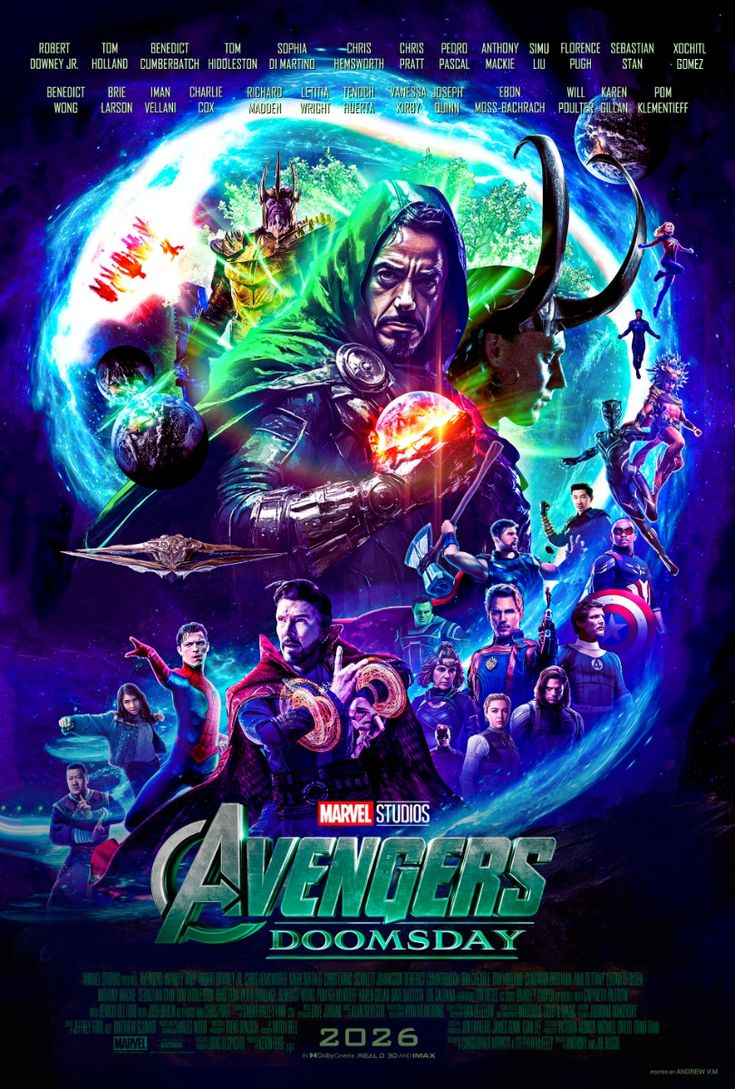
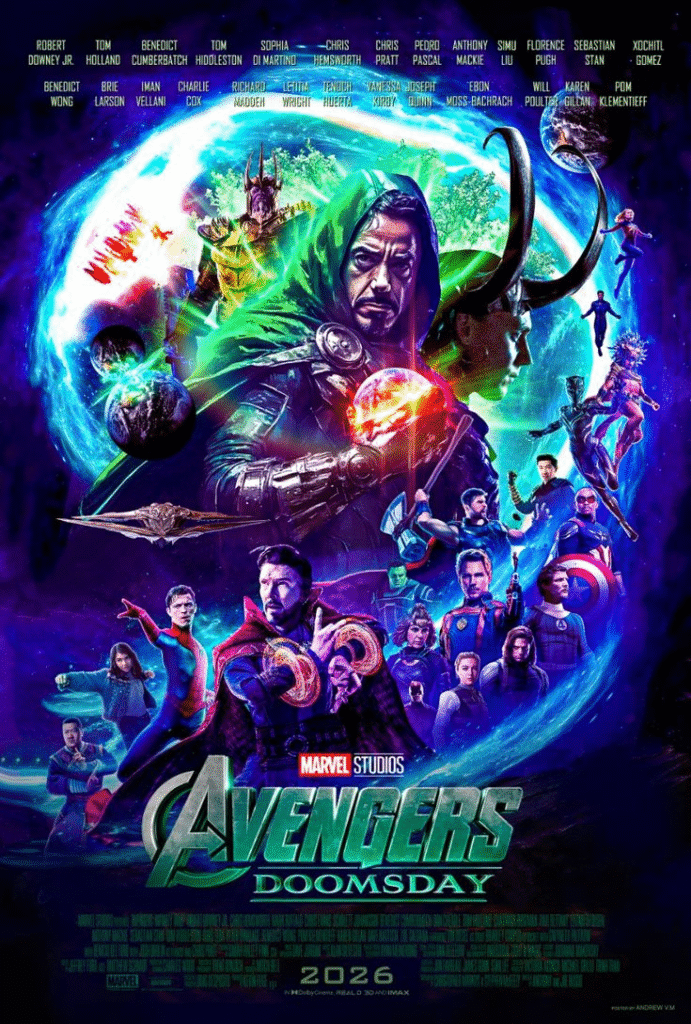
What would a blockbuster of this magnitude be without a truly extraordinary cast to bring its story to life? One of the most exciting aspects of Avengers: Doomsday is its remarkable ensemble, which unites an impressive mix of established stars, beloved fan favorites, and rising talents from across the Marvel universe. The sheer scale of the cast reflects the Avengers – Doomsday film’s ambition, promising a cinematic event unlike anything audiences have seen before.
Veteran heroes who have helped define the Marvel Cinematic Universe for years are expected to share the screen with newer characters who are only beginning to make their mark. This blend of experience and fresh energy creates endless opportunities for compelling interactions, unexpected alliances, and emotional character moments. Fans will have the chance to see iconic figures return while also watching the next generation of heroes step into larger and more significant roles.
What makes the ensemble especially exciting is the diversity of personalities, backgrounds, and perspectives represented within it. With characters drawn from different corners of the multiverse, the Avengers – Doomsday film has the potential to deliver unique dynamics that previous Marvel projects could only hint at. The result is a cast lineup so expansive and star-studded that it feels almost unreal a gathering of talent designed to match the enormous scale, high stakes, and epic scope of Avengers: Doomsday.
The Return of the King: Robert Downey Jr. as Victor von Doom
Let’s talk about the biggest surprise surrounding Avengers: Doomsday. When Kevin Feige revealed that Robert Downey Jr. would be returning to the Marvel Cinematic Universe, fans around the world reacted with a mixture of excitement, disbelief, and endless speculation. After all, Downey’s portrayal of Tony Stark helped build the MCU into a global phenomenon, making his comeback one of the most significant announcements in the franchise’s history.
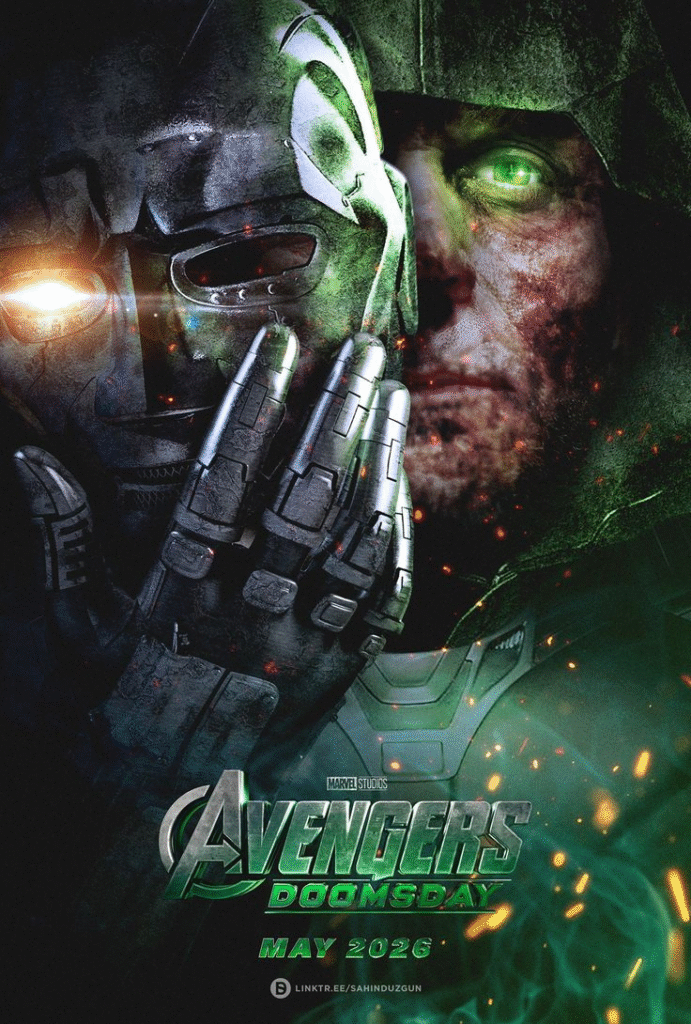
However, the real twist is that he will not be stepping back into the iconic Iron Man armor. Instead of reprising the role that made him a household name, Downey is taking on the mantle of Victor von Doom, better known as Doctor Doom. This legendary Marvel villain is renowned for his genius-level intellect, immense ambition, and unwavering belief that he alone is capable of shaping the future. Hidden behind a cold metallic mask, Doom is a character defined by power, pride, and a relentless drive for control.
The casting choice is both unexpected and fascinating. By transforming one of the MCU’s most beloved heroes into one of its most feared villains, Marvel is signaling that Avengers: Doomsday is willing to take bold creative risks. The decision instantly raises intriguing questions about the Avengers – Doomsday film’s story, the multiverse, and how this version of Doctor Doom will fit into the larger narrative. Whether fans view it as shocking, daring, or brilliant, one thing is certain: Robert Downey Jr.’s return has become one of the most talked-about elements of the movie and could ultimately redefine the future of the Marvel Cinematic Universe.
A Stark Contrast: Why RDJ’s Return Changes Everything
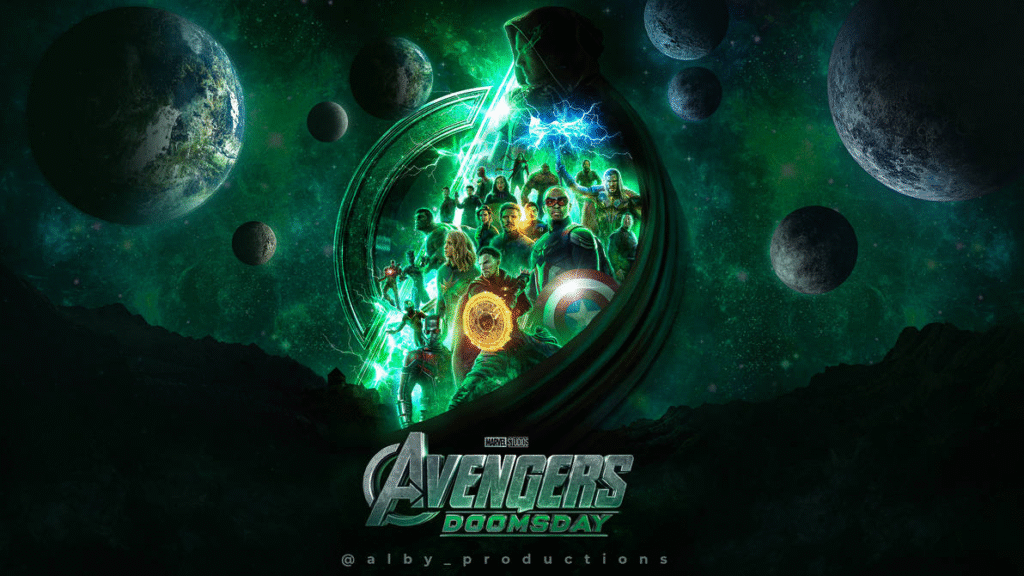
One of the most fascinating aspects of this casting decision is the powerful layer of symbolism it brings to the story. By casting Robert Downey Jr. as Victor von Doom, Marvel has created a narrative dynamic that extends far beyond a typical hero-versus-villain conflict. For audiences, Downey’s face is forever linked to Tony Stark, the hero whose sacrifice helped save the universe. Seeing that same actor return in the role of a potential destroyer introduces an emotional complexity that few blockbuster Avengers – Doomsday films have ever attempted.
The impact goes beyond simple nostalgia. For both the characters within the story and the audience watching it unfold, Doctor Doom’s presence may serve as a haunting reminder of a beloved hero. Rather than confronting an unfamiliar threat from a distant world, the heroes could find themselves facing someone who evokes memories of the very person who once inspired and protected them. That contrast creates a deeply unsettling emotional tension, blurring the line between familiarity and fear.
This approach has the potential to transform Avengers: Doomsday into something more than a spectacle-driven superhero adventure. Beneath the large-scale battles and multiversal stakes lies the possibility of a story centered on grief, legacy, identity, and the painful realization that even the most recognizable face can represent something entirely different. If handled effectively, this psychological dimension could make the conflict feel more personal, tragic, and emotionally resonant, elevating the Avengers – Doomsday film into one of the MCU’s most thought-provoking chapters.
The Multiverse’s New Heavy Hitters: Pedro Pascal and Chris Hemsworth
Supporting the Avengers – Doomsday film’s central conflict is an impressive lineup of talent that brings both star power and narrative weight to the story. Pedro Pascal is expected to play a pivotal role in Marvel’s future, stepping into a leadership position that could shape the direction of the franchise for years to come. Known for commanding performances and a strong on-screen presence, Pascal adds a sense of authority and experience to an ensemble already packed with iconic characters.
Alongside him stands Chris Hemsworth, returning as Thor, the God of Thunder and one of the MCU’s longest-serving heroes. Over the years, Thor has evolved from an arrogant prince into a battle-tested warrior who has endured tremendous loss, making him one of the franchise’s most emotionally layered characters. His experience with cosmic threats and universe-altering conflicts positions him as a crucial figure in the fight ahead.
The combination of Pascal’s emerging leadership and Hemsworth’s veteran heroism creates a compelling dynamic within the larger ensemble. One represents the future of the Marvel universe, while the other embodies its enduring legacy. Together, they help bridge different eras of the franchise, ensuring that Avengers: Doomsday feels both like a culmination of everything that came before and the beginning of an exciting new chapter.
The Cosmic Might of Thor Meets The Smartest Family Alive
Imagine Thor, a god who has endured the destruction of his home, the loss of loved ones, and countless personal tragedies, standing alongside a new generation of heroes whose understanding of reality is rooted in advanced science, multiversal theory, and complex physics. Thor approaches challenges through experience, instinct, and centuries of hard-earned wisdom, while newer heroes may rely on calculations, technology, and a deeper understanding of how the multiverse functions. Each hero brings unique strengths, knowledge, and abilities that may prove essential in the battle ahead.
Survival will depend on unlikely alliances, mutual trust, and the willingness to combine vastly different approaches into a united front. It is not merely a collection of powerful individuals sharing the screen; it is a gathering of heroes shaped by different worlds, experiences, and philosophies. When the fate of entire realities hangs in the balance, their ability to work together may become the deciding factor between preserving existence and witnessing its complete collapse. The emotional depth, ideological conflicts, and eventual unity of these characters could ultimately become one of the Avengers – Doomsday film’s greatest strengths.
Production Mechanics: Bringing Doomsday to the Silver Screen
Producing a Avengers – Doomsday film on the scale of Avengers: Doomsday is an enormous undertaking that extends far beyond the work of its actors and directors. The process resembles a massive coordinated operation, requiring thousands of professionals across multiple departments to work together with extraordinary precision. From production designers and stunt coordinators to visual-effects artists, costume specialists, and technical crews, every team plays a vital role in bringing such an ambitious vision to life.
The logistical challenges alone are staggering. Large-scale productions often rely on sprawling soundstages, complex filming schedules, intricate set construction, and advanced equipment capable of capturing both intimate character moments and world-shattering action sequences. Every scene must be carefully planned to ensure that practical effects, digital environments, and live performances blend seamlessly on screen.
Modern blockbuster filmmaking also depends heavily on cutting-edge technology. Sophisticated visual effects, motion-capture systems, virtual production tools, and advanced post-production techniques allow filmmakers to create entire worlds that would have been impossible to realize just a decade ago. Yet technology is only part of the equation. The true achievement lies in coordinating thousands of moving pieces into a single, cohesive experience that feels effortless to audiences.
When viewers watch a finished Avengers – Doomsday film, they see two or three hours of entertainment. Behind those hours, however, are years of planning, collaboration, and problem-solving by countless talented individuals. For a project as ambitious as Avengers: Doomsday, that collective effort is what transforms a bold creative vision into a cinematic event capable of captivating audiences around the world.
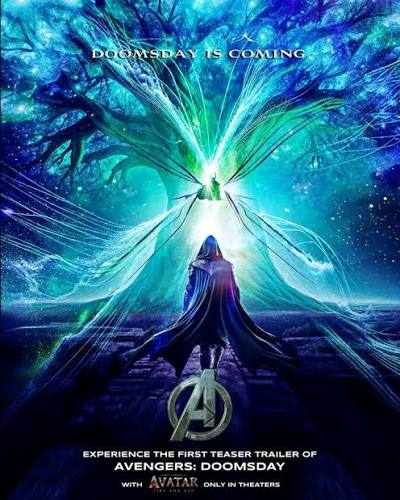
From Pinewood Studios to the Cosmos: Filming in London
A production as ambitious as Avengers: Doomsday requires a home capable of supporting its enormous creative vision, and much of that work has been centered at Pinewood Studios, one of the most iconic filmmaking facilities in the world. For decades, its soundstages have served as the birthplace of countless cinematic adventures, from legendary spy thrillers to epic science-fiction sagas. Yet even by Pinewood’s lofty standards, the scope of this production appears exceptionally ambitious.
Reports surrounding the Avengers – Doomsday film suggest that massive practical sets were constructed to help bring the story’s multiversal settings to life. Rather than relying exclusively on digital environments, the production invested heavily in creating detailed physical locations that actors could interact with directly. These environments reportedly included sprawling city streets, alternate-reality landscapes, and large-scale structures designed to immerse performers in the world of the film.
This approach offers significant advantages beyond visual spectacle. When actors can walk through real sets, touch physical objects, and react to tangible surroundings, their performances often feel more authentic and grounded. The environments become an active part of the storytelling rather than something added entirely during post-production. Combined with cutting-edge visual effects, these practical sets help create a richer and more believable cinematic experience.
For a movie built around the collision of worlds and realities, constructing expansive physical environments demonstrates Marvel’s commitment to scale and immersion. It reflects a filmmaking philosophy that blends traditional craftsmanship with modern technology, ensuring that the multiverse feels not only visually impressive but also real enough for audiences to believe in every moment of the adventure.
Sensory Overload: The Technical Spec Breakdown
For movie enthusiasts who appreciate the technical side of filmmaking, Avengers: Doomsday is shaping up to be a true showcase of modern cinematic technology. This is not the kind of Avengers – Doomsday film designed to be watched casually in the background. Every aspect of its production appears aimed at delivering a massive theatrical experience that takes full advantage of the latest advancements in sound, visual effects, and large-format presentation.
From breathtaking multiversal environments to intricate action sequences involving dozens of characters, the Avengers – Doomsday film is expected to push the capabilities of contemporary theater systems to their limits. Massive visual scale, detailed effects work, and dynamic cinematography are all being crafted to immerse audiences in a world where entire realities hang in the balance. The goal is not simply to impress viewers with spectacle but to make them feel as though they are witnessing events of unimaginable magnitude firsthand.
The audio experience is likely to be just as important. Thunderous battles, universe-shaking collisions, and emotionally charged moments can gain tremendous impact when paired with cutting-edge sound design and premium theater formats. Every explosion, heroic entrance, and dramatic confrontation is intended to resonate throughout the auditorium, creating a level of immersion that home viewing often struggles to replicate.
Ultimately, Avengers: Doomsday appears to be engineered as a full-scale cinematic event—one that combines state-of-the-art technology with epic storytelling to create an experience designed for the biggest screens and most advanced theater systems available. For fans who love blockbuster filmmaking at its most ambitious, this promises to be a spectacle that engages both the eyes and ears from beginning to end.
IMAX Formats and Dolby Atmos Sonic Brilliance
From a technical perspective, Avengers: Doomsday is being designed to deliver a truly immersive theatrical experience. When paired with premium large-format screens, particularly IMAX presentations, this wider frame can make the movie’s colossal environments and universe-spanning action sequences feel even more overwhelming. Advanced sound formats such as Dolby Atmos and IMAX digital sound systems are built to create a three-dimensional audio environment, allowing sounds to move naturally around the audience rather than coming from a single direction.
Instead of merely hearing the destruction, audiences will be able to feel it surrounding them from all directions, creating a stronger emotional and physical connection to the events unfolding on screen. Combined with cutting-edge visual effects and large-format presentation, these technical elements are intended to transform Avengers: Doomsday into more than just a movie. They are designed to make the audience feel as though they have stepped directly into the heart of a collapsing multiverse, experiencing every moment with a level of immersion that only modern theatrical technology can provide.
Predicting the Inevitable: How Doomsday Sets Up Secret Wars
If the Russo brothers’ previous Marvel films have demonstrated anything, it is their willingness to take bold narrative risks and leave audiences with unforgettable emotional impact. Rather than always delivering straightforward victories and neatly resolved conclusions, their stories often explore the consequences of failure, sacrifice, and uncertainty. The ending of Avengers: Infinity War remains one of the most memorable examples, shocking audiences by allowing the heroes to lose and leaving viewers in stunned silence as the credits rolled.
That history has led many fans to believe that Avengers: Doomsday could follow a similar path. As the Avengers – Doomsday film is expected to set the stage for Avengers: Secret Wars, its primary role may be to escalate the conflict to an unprecedented level rather than resolve it completely. Instead of offering a definitive conclusion, the story could end with the heroes facing their darkest moment, setting up an even larger confrontation in the chapter that follows.
The title itself suggests a narrative centered on collapse and transformation. Entire realities may be pushed to the brink of destruction, alliances could be shattered, and long-established assumptions about the Marvel universe may be overturned. By the time the credits roll, audiences may find themselves looking at a dramatically altered landscape where the future is uncertain and the stakes have never been higher.
Such an ending would serve an important purpose. A story called Doomsday is not necessarily about preventing disaster—it may be about witnessing the disaster unfold. The Avengers – Doomsday film has the potential to dismantle the existing order of the multiverse, creating a fractured reality that leads directly into Secret Wars. In that scenario, the sequel would not simply continue the story; it would explore the aftermath of a universe-spanning catastrophe where the traditional boundaries of space, time, and even personal identity have been fundamentally disrupted.
If Marvel follows this direction, Avengers: Doomsday could become more than a blockbuster event. It could function as the dramatic turning point of the entire Multiverse Saga, delivering a powerful cliffhanger that leaves audiences eagerly awaiting the final chapter while reshaping the future of the Marvel Cinematic Universe in the process.
Conclusion
Avengers: Doomsday* is shaping up to be much more than another major release in a long-running franchise. By reuniting Marvel with the acclaimed Russo brothers, bringing back Robert Downey Jr. in a bold new role, and weaving together heroes and worlds from across the multiverse, the Avengers – Doomsday film aims to deliver an event of unprecedented scale and significance. From cutting-edge visual effects and immersive theatrical technology to emotionally charged character arcs and universe-altering stakes, the movie appears designed to challenge expectations of what a modern blockbuster can be. At its core.
Avengers: Doomsday carries the weight of being a major turning point for the Marvel Cinematic Universe. It is expected to reshape familiar realities, test beloved heroes in ways never seen before, and lay the foundation for the climactic events that follow. Whether it ultimately becomes Marvel’s most ambitious achievement remains to be seen, but one thing is already clear: Avengers: Doomsday has all the ingredients of a cinematic event capable of capturing the imagination of audiences around the world.
Do Follow Us On : https://talkieflix.com.
I am truly thankful to the owner of this web site who has shared this fantastic piece of writing at at this place.